When haze returns to Singapore, air quality becomes a familiar concern.
The grey skies and reduced visibility are a reminder that air pollution does not always originate within the city itself. During transboundary haze events, smoke and fine particulate matter can travel across the region, affecting Singapore’s air quality.
This raises an interesting question for a city known for its extensive greenery: Can urban greenery actually help improve air quality during haze?
Trees, green walls, green roofs and other forms of nature-based infrastructure are increasingly being integrated into Singapore’s built environment. Beyond making cities greener, these systems can provide a range of environmental functions, from supporting biodiversity and managing stormwater to mitigating urban heat.
Air quality is another potential benefit.
Research has shown that vegetation can capture particulate matter from the air, including fine particles such as PM2.5. However, this does not mean that planting more greenery can eliminate Singapore’s haze.
The reality is more nuanced; urban greenery can contribute to local air-quality improvement, but it is not a solution for clearing transboundary haze.
Understanding this distinction is important when considering what green infrastructure can and cannot do for Singapore’s urban environment.
What Happens to Air Quality During Singapore’s Haze?
Singapore’s haze is often associated with smoke transported from vegetation and land fires elsewhere in the region. One of the main pollutants of concern is particulate matter, particularly PM2.5.
When concentrations increase, air quality can deteriorate and visibility can decrease. This creates an important distinction between two different environmental challenges.
– Local urban pollution: This can come from sources such as vehicle emissions, construction activity and other activities within an urban area.
– Transboundary haze: This involves smoke and particulate matter transported over long distances from fires outside Singapore.
Urban greenery may have a role in interacting with local airborne pollutants, but its ability to influence a regional haze event is inherently limited by the scale of the problem.
How Does Urban Greenery Interact With Air Pollution?
Plants interact with the atmosphere in several ways.
One of the most relevant to air quality is particulate deposition.
As air moves through or around vegetation, some airborne particles can come into contact with leaves, stems and other plant surfaces. These particles can subsequently remain deposited on the vegetation.
The effectiveness of this process depends on several factors, including:
- – Plant species
- – Leaf size and surface characteristics
- – Vegetation density
- – Particle size
- – Wind speed and direction
- – Local pollution levels
- – The design and location of the green infrastructure
This means that vegetation can act as a surface for particulate capture, but it is not equivalent to a mechanical air filter. A tree, green wall or green roof is a living system interacting with a constantly changing outdoor environment.
Its environmental benefits are therefore broader and more variable.
How Can Urban Greenery Help With Haze?
Urban greenery cannot prevent transboundary haze from reaching Singapore, nor can it remove enough particulate matter from the atmosphere to clear the air during a major haze event.
However, vegetation can still play a role in local particulate matter capture and broader urban environmental resilience.
As polluted air moves through or around vegetation, some airborne particles can deposit onto leaves, stems and other plant surfaces. The extent of this effect depends on factors such as plant species, foliage density, particle size, airflow and the surrounding urban environment.
This means that green infrastructure is better understood as a potential contributor to local air-quality improvement, rather than a replacement for dedicated air filtration or measures to address the source of haze.
Different forms of urban greenery can contribute to this in different ways:
Green Walls

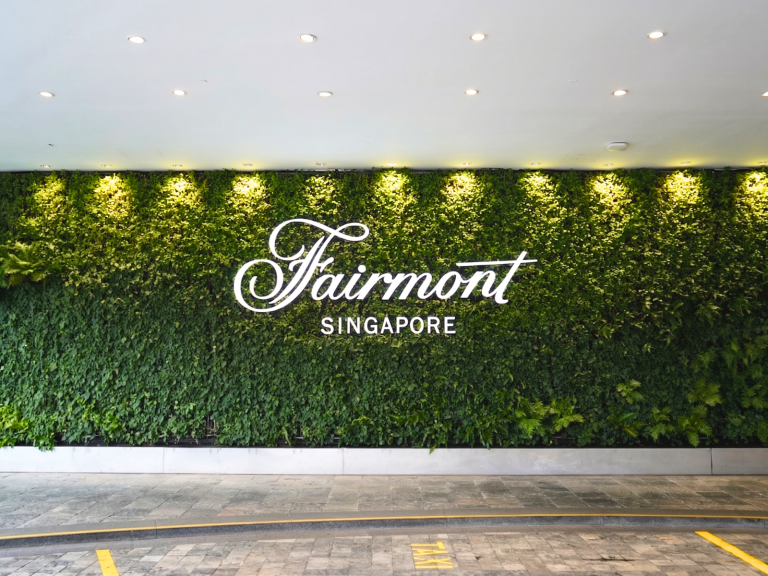
Green Wall at Changi Airport Terminal 4
Green walls bring vegetation onto building facades and other vertical surfaces, making use of space that would otherwise remain largely unplanted.
Their vertical orientation makes them particularly relevant to dense urban environments, where opportunities for ground-level planting may be limited. Dense foliage provides additional leaf surface area that can interact with airborne particles in the surrounding environment.
However, the location of a green wall matters. A wall positioned near a pollution source or within an area where air naturally moves through the vegetation may interact with particulate matter differently from one located in a sheltered or elevated position.
Beyond particulate capture, green walls can also provide shading, contribute to cooling through evapotranspiration, support biodiversity and introduce natural elements into highly built-up spaces.
Green Roofs

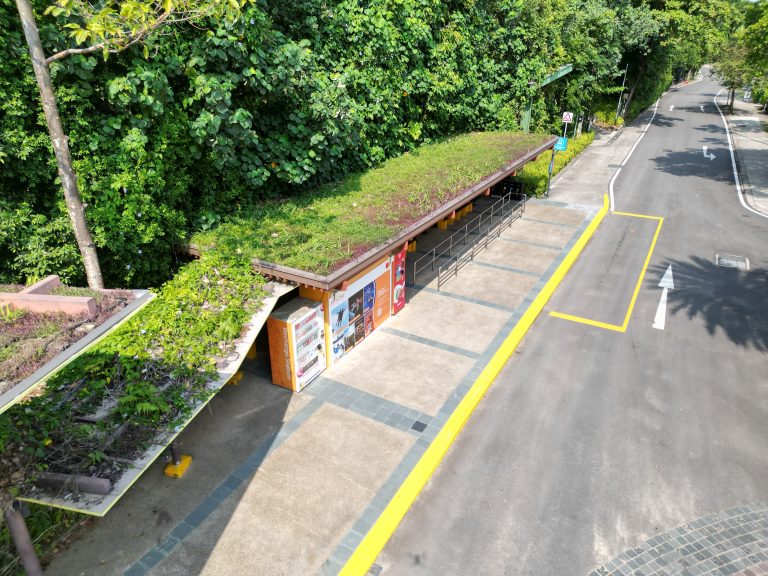
Green Roof at Sentosa
Green roofs provide another layer of vegetation within the city, transforming otherwise exposed roof surfaces into planted environments.
Like green walls, their vegetation provides surfaces onto which airborne particles can deposit. However, their contribution to haze mitigation is likely to be more localised, depending on their height, surrounding airflow and relationship to the areas where people are exposed to pollution.
Their broader environmental functions can be equally important.
Green roofs can help reduce the heat absorbed by exposed roof surfaces, retain and manage rainfall, and create habitat for plants and urban wildlife. These benefits contribute to the wider resilience of the built environment, even when their direct influence on ambient air quality is difficult to measure.
Microforests and Urban Trees

Microforest at Vidacity Pasir Ris
At ground level, trees and densely planted microforests provide a much larger three-dimensional layer of vegetation.
Their canopies, branches and leaves create surfaces that can interact with airborne particles while also influencing shade, temperature and airflow within urban spaces.
Microforests can be particularly useful where land is limited but there is an opportunity to create a concentrated area of diverse vegetation. Their layered planting can provide habitat, shade and ecological connectivity while contributing to the overall amount of vegetation within an urban area.
As with green walls and green roofs, however, their ability to influence air quality depends heavily on where they are planted and how they interact with surrounding airflow.
The Bigger Picture: Greenery as Part of a Haze-Resilient City
While green walls, green roofs, trees and microforests may differ in form, their role in relation to haze is fundamentally similar. They provide additional vegetation and surface area that can interact with airborne particulate matter.
But their value extends well beyond this single function; urban greenery can simultaneously contribute to cooling, biodiversity, stormwater management, shading and the creation of more liveable public spaces. These functions become increasingly important as cities face multiple environmental pressures at the same time.
This is why it may be more useful to think of urban greenery as part of a layered approach to urban resilience, rather than as a standalone solution to air pollution.
Different forms of greenery can help create a city where nature is integrated into buildings, streets and public spaces, providing a range of environmental benefits beyond aesthetics.
Ultimately, the question is not simply whether greenery can “clean” the air but how urban greenery can be designed and positioned to provide the greatest environmental benefit within the city.
So.. Can Urban Greenery Improve Air Quality During Haze in Singapore?
Urban greenery can contribute to local environmental quality, including the potential capture of airborne particulate matter.
Green walls, green roofs, trees and microforests all provide opportunities to bring vegetation into Singapore’s built environment. However, their ability to improve air quality varies depending on their design, location, vegetation and surrounding conditions.
During a major haze event, these systems cannot remove enough particulate matter from the atmosphere to clear Singapore’s skies or eliminate transboundary haze.
But that does not make them irrelevant.
The environmental value of urban greenery extends far beyond air filtration.
Green infrastructure can simultaneously contribute to urban cooling, biodiversity, stormwater management, habitat creation and more liveable public spaces.
For a dense tropical city like Singapore, that means looking beyond individual green walls, green roofs or microforests and towards a connected network of nature-based solutions integrated throughout the urban environment. Greenery may not be able to stop the haze from arriving. But thoughtfully designed green infrastructure can still play a role in creating a healthier, cooler and more resilient city.
If you’d like to learn more about our approach to green engineering and nature-integrated design solutions, get in touch with us at hello@gwslivingart.com.