Climate change is changing the way we live, work, and design our urban environments across the world. As temperatures rise and extreme weather events become more frequent, urban environments face increasing stress — from heatwaves and heavy rainfall to flooding and declining air quality.
Growing climate challenges demand smarter, greener solutions. Green infrastructure, such as green roofs, green walls, and urban greening, is becoming a key part of how cities can adapt and thrive in the face of extreme weather.
Cooling the City: Reducing the Urban Heat Island Effect
Urban areas are known to be several degrees warmer than surrounding rural areas, a phenomenon called the urban heat island effect. Concrete and asphalt absorb and retain heat, raising surface and ambient temperatures.
Green roofs and green walls act as natural insulators. Their vegetation layer shades building surfaces, reducing heat absorption during the day and cooling the surrounding air through evapotranspiration. This not only makes cities more comfortable but also lowers energy consumption as buildings require less air conditioning during heatwaves.
In tropical cities, lightweight, soilless green roof systems are particularly effective — offering the same benefits without adding excessive structural load. Over time, these systems contribute to cooler microclimates across dense urban areas.
Managing Stormwater and Reducing Flood Risk
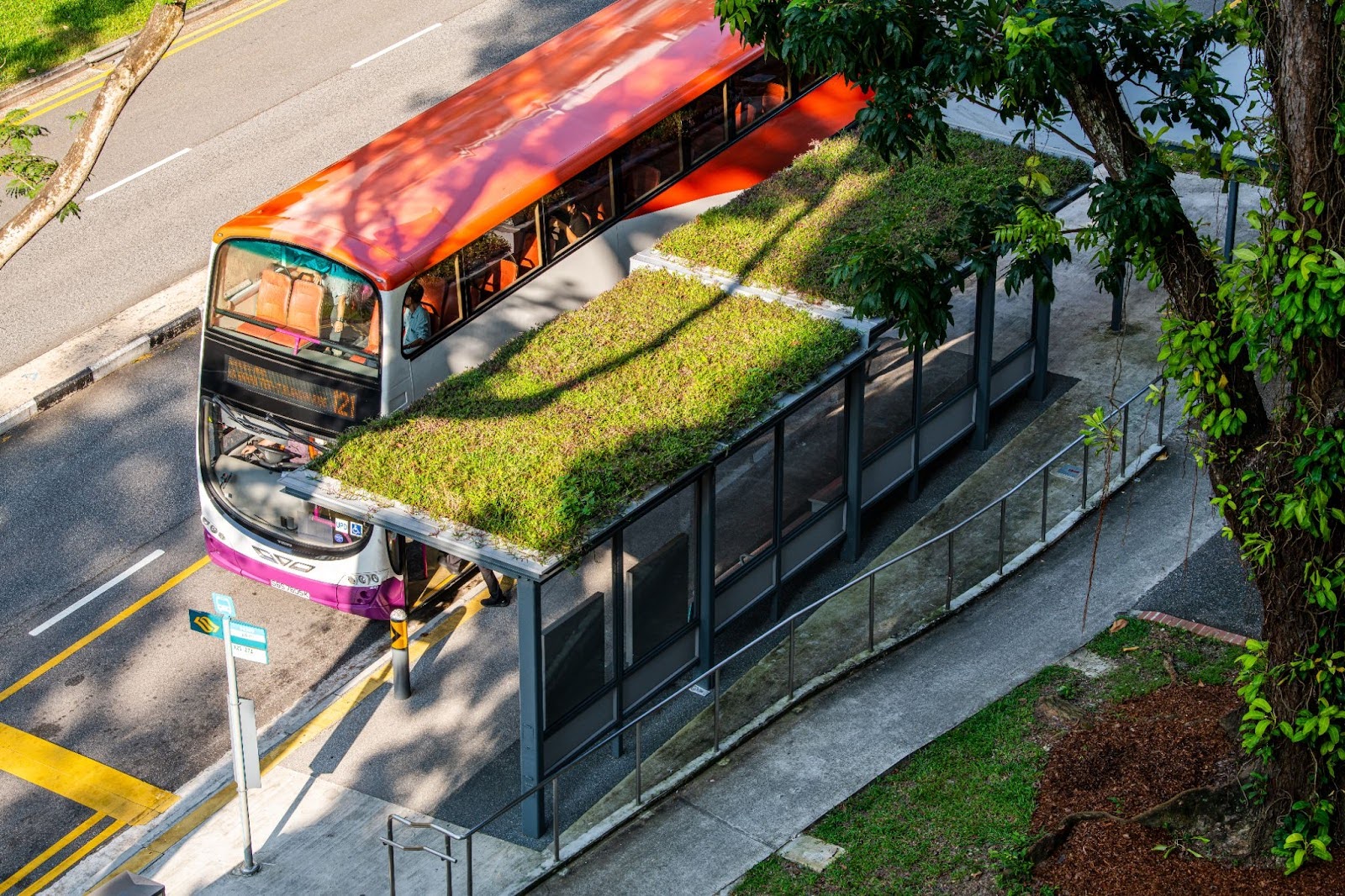
Green roofs installed by GWS on bus stops around Singapore
Climate change doesn’t just make cities hotter, it also makes rainfall more unpredictable. Sudden downpours and flash floods are becoming increasingly common.
Soilless, lightweight green roofs can help mitigate these effects by capturing and slowing rainwater runoff. Instead of overwhelming drains and sewers, the green roof acts as a natural sponge, absorbing rainwater and releasing it gradually. This process helps reduce flood risk and prevents erosion or waterlogging at ground level.
At scale, widespread adoption of green roofs and permeable landscaping can dramatically improve a city’s stormwater management capacity — turning potential flood zones into self-regulating, resilient ecosystems.
Project Highlights & Challenges

The Microforest @ Vidacity
Trees and plants do more than beautify our surroundings, they act as natural carbon sinks. Through photosynthesis, they absorb carbon dioxide and release oxygen, helping to offset urban carbon emissions.
Large-scale afforestation and urban greening initiatives contribute to this balance, sequestering CO₂ and improving overall air quality. The presence of vegetation also filters pollutants and traps dust particles, while reviving biodiversity and supporting urban wildlife, creating healthier, more breathable environments for urban residents.
Building Resilience Through Community and Collaboration
Ultimately, creating climate-resilient cities is not just about technology or design — it’s about mindset and collaboration.
Green spaces often become hubs for community engagement, education, and bottom-up sustainability initiatives. Whether it’s a community garden on a rooftop or a shared learning space, these projects nurture a sense of ownership and collective responsibility.
Resilience is not a one-off project — it’s a continuous process. When communities understand and participate in green initiatives, sustainable change becomes embedded in the city’s culture, not just its infrastructure.
Towards a Greener, More Resilient Future
As we face the growing challenges of extreme weather, green infrastructure offers more than aesthetic value — it provides real, measurable climate solutions.
By embracing green roofs, walls, and urban greenery, cities can cool themselves naturally, manage stormwater intelligently, clean the air, and foster thriving ecosystems.
At GWS Living Art, we believe that sustainability is built from the ground up — through innovation, collaboration, and the living systems that connect us all.